
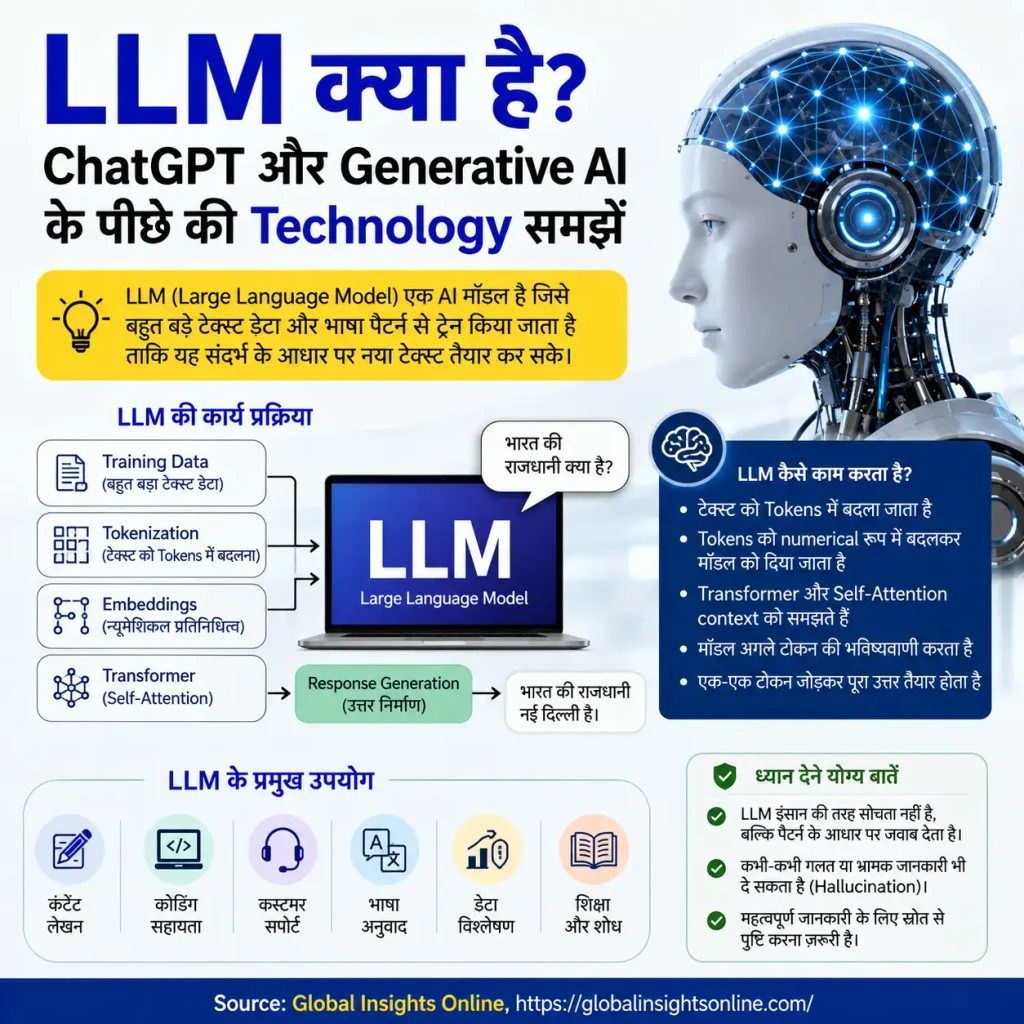
LLM क्या है?
आज ChatGPT, Gemini, Claude और दूसरे AI tools के जरिए हम कुछ ही सेकंड में सवालों के जवाब, लेख, कोड, सारांश और दूसरे प्रकार का content तैयार कर सकते हैं। लेकिन इन AI systems के पीछे कौन-सी technology काम करती है? इस सवाल का जवाब काफी हद तक LLM यानी Large Language Model में मिलता है।
LLM क्या है, इसे आसान भाषा में समझें तो यह एक ऐसा AI model है जिसे बहुत बड़ी मात्रा में text data और language patterns से train किया जाता है। इसका उद्देश्य इंसानी भाषा को process करना और context के आधार पर नया text generate करना होता है। Modern LLMs आमतौर पर deep learning और Transformer architecture पर आधारित होते हैं।
यही technology आज के कई Generative AI applications की आधारभूत technology बन चुकी है। ChatGPT जैसे conversational AI में LLM user के सवाल को process करता है और उसके आधार पर response generate करता है। हालांकि इसे इंसान की तरह जानकारी का conscious understanding नहीं माना जाना चाहिए। यह अपने training और context से सीखे patterns के आधार पर output तैयार करता है।
अगर आप Generative AI की basic technology को पहले समझना चाहते हैं, तो Global Insights Online पर प्रकाशित Generative AI क्या है और यह कैसे काम करता है वाला लेख भी पढ़ सकते हैं।
LLM का Full Form क्या है?
LLM का Full Form Large Language Model है।
इस नाम में तीन महत्वपूर्ण शब्द हैं। Large इसलिए क्योंकि इन models को बहुत बड़े datasets और बड़ी संख्या में parameters के साथ बनाया जा सकता है। Language इसलिए क्योंकि इनका मुख्य काम human language से जुड़े patterns को समझना और language-based output तैयार करना है। Model इसलिए क्योंकि यह एक trained mathematical AI system होता है जो input के आधार पर predictions करता है।
हालांकि आज के advanced models केवल text तक सीमित नहीं हैं। कुछ modern AI models text के साथ image, audio और video जैसी अलग-अलग information types को भी process कर सकते हैं। इसलिए AI industry में language models और multimodal models के बीच अंतर समझना भी जरूरी हो गया है।
LLM कैसे काम करता है?
अब सवाल आता है कि LLM कैसे काम करता है?
इसकी पूरी प्रक्रिया काफी technical है, लेकिन इसे कुछ प्रमुख stages में समझा जा सकता है। सबसे पहले model को बड़ी मात्रा में training data दिया जाता है। इसके बाद text को छोटे units यानी tokens में divide किया जाता है। Model इन tokens के बीच relationships और patterns सीखता है।
जब user कोई सवाल पूछता है, तो input भी tokens में convert होता है। LLM उस input और उपलब्ध context को process करके संभावित अगला token predict करता है। यह प्रक्रिया एक token के बाद दूसरे token को generate करते हुए पूरी response तैयार करती है।
उदाहरण के लिए, अगर आप AI से पूछते हैं, “भारत की राजधानी क्या है?”, तो model आपके प्रश्न को tokens और numerical representations में process करता है। इसके बाद learned patterns और context के आधार पर response generate करता है।
यह जरूरी नहीं है कि model किसी database में जाकर हर सवाल का एक fixed answer खोज रहा हो। LLM का response generation मुख्य रूप से उसके learned parameters और current context पर आधारित prediction process है।
Token क्या होता है?
LLM को समझने के लिए Token को समझना बहुत जरूरी है।
हम इंसान भाषा को शब्दों और वाक्यों में देखते हैं, लेकिन AI models text को tokens में process करते हैं। एक token पूरा शब्द, किसी शब्द का हिस्सा, punctuation या कुछ परिस्थितियों में character भी हो सकता है। Tokenization का तरीका model और language के अनुसार बदल सकता है।
उदाहरण के लिए किसी sentence को model कई छोटे text units में divide कर सकता है। फिर इन tokens को numerical representations में बदला जाता है ताकि neural network उन्हें process कर सके।
इसी वजह से AI tools में input tokens और output tokens जैसी terms दिखाई देती हैं। लंबे prompt या लंबे document को process करने में ज्यादा tokens की आवश्यकता हो सकती है।
Transformer क्या है और LLM में इसका क्या काम है?
Transformer architecture आधुनिक LLM technology का सबसे महत्वपूर्ण हिस्सा है। 2017 में Transformer architecture को पेश किए जाने के बाद language processing और AI models के development में बड़ा बदलाव आया। Transformer की सबसे महत्वपूर्ण तकनीकों में से एक self-attention है।
Self-attention model को यह समझने में मदद करता है कि किसी sentence में अलग-अलग tokens का एक-दूसरे से क्या संबंध है। इससे model लंबे input में context और relationships को बेहतर तरीके से process कर सकता है।
मान लीजिए एक paragraph में किसी व्यक्ति का नाम शुरुआत में आया और उसके बारे में जानकारी कई sentences बाद दी गई। Self-attention mechanism model को context के अलग-अलग हिस्सों के बीच relationship calculate करने में मदद करता है।
यही वजह है कि Transformer-based models लंबे और complex language inputs को process करने में पुराने sequence-based approaches की तुलना में अधिक सक्षम हो सकते हैं।
Transformer architecture की शुरुआत को समझने के लिए Google Research और University of Toronto के researchers द्वारा प्रकाशित “Attention Is All You Need” research paper महत्वपूर्ण reference है। इस paper ने attention-based Transformer architecture को प्रस्तुत किया था, जिसने बाद में modern language models के development में महत्वपूर्ण भूमिका निभाई।
LLM Training क्या है?
LLM Training वह process है जिसमें AI model language patterns सीखता है।
Training के दौरान model को बहुत बड़े text datasets पर train किया जाता है। इन datasets में अलग-अलग प्रकार के text और code शामिल हो सकते हैं। Training के दौरान text को tokens में divide किया जाता है और model को patterns सीखने के लिए repeated prediction tasks दिए जाते हैं।
एक सामान्य उदाहरण से समझें। अगर training data में sentence है:
“आज मौसम बहुत ___ है।”
तो model को context देखकर अगले token की prediction करनी होती है। शुरुआत में predictions काफी inaccurate हो सकती हैं। लेकिन training के दौरान model अपनी prediction और expected token के बीच error को calculate करता है और अपने internal parameters को adjust करता है।
यह प्रक्रिया बड़े scale पर बार-बार दोहराई जाती है। धीरे-धीरे model language structure, grammar, relationships और दूसरे patterns को बेहतर तरीके से model करने लगता है।
LLM Parameters क्या होते हैं?
LLM की चर्चा में parameters शब्द भी अक्सर सुनने को मिलता है।
Parameters model के internal numerical values होते हैं जो यह निर्धारित करने में मदद करते हैं कि model input को कैसे process करेगा और predictions कैसे बनाएगा। बड़े language models में parameters की संख्या बहुत अधिक हो सकती है।
लेकिन केवल ज्यादा parameters होने का मतलब यह नहीं है कि कोई model हर काम में automatically बेहतर होगा। Model की quality पर training data, architecture, training methods, post-training, evaluation और inference system जैसे कई factors असर डालते हैं।
इसलिए केवल model size देखकर उसकी overall capability का अनुमान लगाना सही तरीका नहीं है।
LLM Training और LLM Inference में क्या अंतर है?
यह distinction LLM Technology को समझने के लिए बहुत महत्वपूर्ण है।
Training के दौरान model अपने parameters को update करके patterns सीखता है। यह process computationally बहुत demanding हो सकता है और इसके लिए बड़े datasets तथा specialized hardware की आवश्यकता पड़ सकती है।
दूसरी तरफ Inference वह stage है जब trained model को किसी नए prompt या input पर चलाकर response generate किया जाता है। यानी training को आप learning process की तरह और inference को learned model के practical use की तरह समझ सकते हैं।
जब आप ChatGPT में कोई सवाल लिखते हैं और कुछ seconds में answer मिलता है, तब background में LLM inference process हो रहा होता है।
ChatGPT और LLM का क्या संबंध है?
बहुत से लोग ChatGPT और LLM को एक ही चीज समझते हैं, लेकिन दोनों में अंतर है।
LLM एक AI model technology है, जबकि ChatGPT एक user-facing AI service है जो language models का इस्तेमाल करके users के साथ बातचीत करती है। OpenAI के अनुसार ChatGPT को questions, writing, translation, coding, research, analysis और दूसरे tasks में इस्तेमाल किया जा सकता है।
इसलिए आसान भाषा में कहें तो LLM engine की तरह है और ChatGPT उस technology पर बनाया गया application/interface हो सकता है।
इसी तरह अलग-अलग companies अपने language models को अलग products और services में इस्तेमाल कर सकती हैं।
ChatGPT कैसे जवाब तैयार करता है?
जब user ChatGPT को कोई prompt देता है, तो सबसे पहले input को model द्वारा process किए जाने वाले tokens में बदला जाता है। इसके बाद Transformer-based architecture context को analyze करता है और response generate करने की प्रक्रिया शुरू होती है।
Model संभावित next token की probabilities calculate करता है और फिर generated output को आगे बढ़ाता है। यह process बार-बार होती है, जिससे पूरा sentence और फिर पूरा response तैयार होता है।
इसका मतलब यह नहीं है कि AI पहले से पूरा answer लिखकर रखता है और फिर उसे केवल copy करता है। Response generation एक sequential prediction process हो सकती है, जिसमें पहले generated tokens आगे के output को प्रभावित करते हैं।
क्या LLM वास्तव में इंसान की भाषा समझता है?
यह एक interesting लेकिन important सवाल है।
LLM इंसानी भाषा के patterns, relationships और context को बहुत sophisticated तरीके से process कर सकता है। इसी कारण इसके answers कई बार इंसान द्वारा लिखे गए text जैसे दिखाई देते हैं।
लेकिन इसे human-like consciousness या human understanding के बराबर मानना सही नहीं होगा। OpenAI भी बताता है कि language models language patterns सीखकर context के आधार पर अगले हिस्से की prediction करते हैं।
यही कारण है कि LLM बहुत confident दिखाई देने वाला लेकिन गलत answer भी दे सकता है।
इस समस्या को AI Hallucination कहा जाता है। अगर आप जानना चाहते हैं कि ChatGPT कभी-कभी सही दिखाई देने वाली गलत information क्यों देता है, तो Global Insights Online का AI Hallucination क्या है और ChatGPT गलत जवाब क्यों देता है वाला detailed guide पढ़ना उपयोगी रहेगा।
LLM और Generative AI में क्या अंतर है?
LLM और Generative AI एक-दूसरे से जुड़े हुए हैं लेकिन दोनों समान terms नहीं हैं।
Generative AI एक broader category है जिसमें ऐसे AI systems आते हैं जो नया content generate कर सकते हैं। यह content text, image, audio, video या code हो सकता है।
LLM मुख्य रूप से language-related tasks के लिए बनाए गए models हैं। इसलिए text generation वाले कई Generative AI applications के पीछे LLM technology काम कर सकती है।
उदाहरण के लिए किसी AI system से article लिखवाना, email draft करवाना, text summarize करवाना या code generate करवाना language model की capabilities से जुड़ा हो सकता है।
वहीं AI image generation के लिए अलग प्रकार के models और architectures का इस्तेमाल हो सकता है।
LLM का इस्तेमाल कहां किया जाता है?
आज Large Language Model technology का इस्तेमाल कई अलग-अलग क्षेत्रों में हो रहा है।
Customer support में LLM-powered chatbots users के सवालों का जवाब देने में मदद कर सकते हैं। Businesses इन्हें document summarization, information extraction और internal knowledge systems में इस्तेमाल कर सकते हैं।
Content creation में LLM article outlines, drafts, summaries और ideas तैयार करने में मदद कर सकता है। Developers code generation, debugging और documentation जैसे tasks में language models का उपयोग कर सकते हैं।
Education में LLM explanations, practice questions और learning assistance के लिए उपयोगी हो सकता है। Translation, research assistance और conversational interfaces भी इसके महत्वपूर्ण applications हैं।
हालांकि high-stakes areas जैसे medical, legal या financial decisions में AI-generated output को बिना verification के final authority मानना उचित नहीं है।
LLM के फायदे क्या हैं?
LLM technology का सबसे बड़ा फायदा यह है कि यह natural language interface के जरिए complex information और software capabilities को अधिक accessible बना सकती है।
पहले किसी software का इस्तेमाल करने के लिए specific menus, commands या technical knowledge की आवश्यकता हो सकती थी। LLM-based interface में user सामान्य भाषा में अपनी जरूरत बता सकता है।
दूसरा फायदा productivity है। Drafting, summarization, translation, brainstorming और coding जैसे repetitive tasks में AI समय बचाने में मदद कर सकता है।
तीसरा फायदा scalability है। एक ही language model को अलग-अलग applications में integrate करके customer service, enterprise search, content workflows और अन्य use cases बनाए जा सकते हैं।
LLM की सीमाएं क्या हैं?
LLM technology powerful होने के बावजूद perfect नहीं है।
सबसे बड़ी समस्या में से एक गलत information generate करना है। Model language में convincing response बना सकता है लेकिन response factual रूप से गलत हो सकता है।
दूसरी limitation context है। Model के पास जितना context उपलब्ध है और जिस तरीके से उसे information दी गई है, उससे output की quality प्रभावित हो सकती है।
तीसरी समस्या data और bias से जुड़ी है। Training data में मौजूद limitations या biases model के outputs को प्रभावित कर सकते हैं।
इसके अलावा LLM responses की quality prompt, model, available context और task की complexity के अनुसार बदल सकती है। इसलिए important information के लिए independent verification जरूरी है।
LLM और AI Agents का क्या संबंध है?
LLM आज कई AI Agents की core technology के रूप में भी इस्तेमाल हो सकता है।
एक सामान्य chatbot मुख्य रूप से user के सवाल का जवाब देता है। इसके विपरीत AI Agent को tools का उपयोग करने, information retrieve करने और multi-step tasks पूरा करने जैसी capabilities दी जा सकती हैं।
इस स्थिति में LLM reasoning और language interaction के लिए महत्वपूर्ण भूमिका निभा सकता है, जबकि external tools और systems उसे अतिरिक्त actions करने की क्षमता देते हैं।
अगर आप इस concept को विस्तार से समझना चाहते हैं, तो हमारे AI Agents क्या हैं और कैसे काम करते हैं वाले लेख को भी पढ़ सकते हैं।
LLM में Context Window क्या होती है?
जब आप LLM को कोई लंबा document या conversation देते हैं, तो model को उस information के relevant हिस्से को process करना पड़ता है। इसी से जुड़ी concept को context window कहा जाता है।
Context window यह बताती है कि model एक समय में कितने tokens के input और conversation context को process कर सकता है। अलग-अलग models में इसकी क्षमता अलग हो सकती है।
बड़ी context window का फायदा यह है कि model लंबे documents या complex conversations के अधिक हिस्से को एक साथ consider कर सकता है। हालांकि इसका मतलब यह नहीं है कि model हर context में हर detail को समान रूप से याद या उपयोग करेगा।
LLM में Prompt का क्या महत्व है?
LLM से बेहतर output पाने के लिए prompt की quality महत्वपूर्ण हो सकती है।
अगर user केवल लिखता है, “AI के बारे में बताओ”, तो output काफी broad हो सकता है। लेकिन अगर वह audience, language, उद्देश्य, format और required information स्पष्ट कर दे, तो model को task का context बेहतर तरीके से मिल सकता है।
इसी practice को broadly Prompt Engineering से जोड़ा जाता है। अच्छे prompts model को बेहतर structured और relevant output देने में मदद कर सकते हैं।
लेकिन prompt engineering किसी model की factual limitations को पूरी तरह खत्म नहीं करती। अगर model को किसी तथ्य की जानकारी नहीं है या वह गलत prediction करता है, तो अच्छी prompt structure के बावजूद verification की आवश्यकता रह सकती है।
क्या LLM हमेशा सही जवाब देता है?
नहीं। LLM हमेशा सही जवाब नहीं देता।
यह technology language generation में बहुत capable हो सकती है, लेकिन fluent language और factual accuracy एक ही चीज नहीं हैं।
LLM का primary mechanism learned patterns के आधार पर output prediction है। इसलिए किसी answer का confident और professional दिखाई देना यह साबित नहीं करता कि वह factual रूप से सही है।
इसीलिए current news, financial figures, medical information, legal information और महत्वपूर्ण business decisions में AI-generated information को trusted sources से verify करना चाहिए।
LLM का भविष्य क्या है?
LLM technology आने वाले वर्षों में केवल chatbots तक सीमित रहने की संभावना नहीं है। Language models को search, software, enterprise applications, productivity tools और autonomous AI systems में तेजी से integrate किया जा रहा है।
Future में LLMs अधिक multimodal capabilities, बेहतर context handling, efficient inference और specialized applications के साथ विकसित हो सकते हैं।
एक महत्वपूर्ण बदलाव यह भी है कि AI systems केवल text generate करने के बजाय tools के साथ interact करके tasks complete करने की दिशा में बढ़ रहे हैं। इससे LLM technology AI assistants और agentic systems का महत्वपूर्ण हिस्सा बन सकती है।
हालांकि future development के साथ accuracy, privacy, security, copyright, bias और responsible AI जैसे मुद्दे भी उतने ही महत्वपूर्ण रहेंगे।
LLM को आसान उदाहरण से कैसे समझें?
अगर पूरी technology को एक आसान उदाहरण से समझना हो, तो LLM को एक बेहद advanced language prediction system की तरह सोच सकते हैं।
इसे बहुत बड़े amount of text से language patterns सीखने के लिए train किया जाता है। फिर जब user कोई सवाल देता है, तो model उस input को tokens में process करता है, context के relationships को analyze करता है और learned patterns के आधार पर output generate करता है।
यह प्रक्रिया इतनी sophisticated होती है कि output कई बार इंसान द्वारा लिखा हुआ लगता है। लेकिन इसका मतलब यह नहीं है कि model इंसान की तरह सोच रहा है या हर generated statement को independently verify कर रहा है।
यही distinction LLM क्या है इसे सही तरीके से समझने के लिए सबसे महत्वपूर्ण है।
LLM, Generative AI और ChatGPT को एक साथ कैसे समझें?
इन तीनों terms को इस तरह समझना आसान है:
LLM: भाषा को process और generate करने वाला AI model।
Generative AI: नया text, image, audio, video या अन्य content generate करने वाली broader AI technology category।
ChatGPT: ऐसा AI product/interface जो language models का इस्तेमाल करके users के साथ natural-language interaction करता है।
इस relationship को समझने से AI से जुड़े कई दूसरे concepts भी आसानी से समझ आने लगते हैं।
निष्कर्ष: LLM क्या है और यह इतना महत्वपूर्ण क्यों है?
अब अगर सवाल हो कि LLM क्या है, तो सरल जवाब यह है कि Large Language Model एक advanced AI model है जिसे बड़े datasets से language patterns सीखने और context के आधार पर language output generate करने के लिए train किया जाता है।
Transformer architecture, tokenization, self-attention, training और inference इसकी working को समझने के महत्वपूर्ण हिस्से हैं। यही technology ChatGPT जैसे conversational AI और कई दूसरे Generative AI applications को language-based tasks करने में सक्षम बनाती है।
लेकिन LLM को एक perfect knowledge engine समझना सही नहीं है। यह learned patterns के आधार पर output generate करता है और इसलिए कभी-कभी गलत या misleading information भी दे सकता है। AI का बेहतर और सुरक्षित इस्तेमाल करने के लिए उसकी capabilities के साथ उसकी limitations को समझना भी जरूरी है।
आने वाले समय में LLM technology AI applications, business software, search और AI Agents के development में महत्वपूर्ण भूमिका निभा सकती है। इसलिए LLM क्या है और LLM कैसे काम करता है यह समझना केवल technology enthusiasts के लिए नहीं, बल्कि AI का इस्तेमाल करने वाले हर व्यक्ति के लिए उपयोगी है।
Frequently Asked Question
LLM का Full Form क्या है?
LLM का Full Form Large Language Model है। यह ऐसा AI model है जिसे बड़ी मात्रा में data से language patterns सीखने और text generate करने के लिए train किया जाता है।
LLM कैसे काम करता है?
LLM input को tokens में process करता है और Transformer architecture तथा learned parameters की मदद से context के आधार पर अगले tokens की prediction करता है। इन्हीं predictions से पूरा response तैयार होता है।
क्या ChatGPT एक LLM है?
ChatGPT एक AI service/product है जो language models का उपयोग करती है। इसलिए ChatGPT और LLM को बिल्कुल समान चीज मानना सही नहीं है।
LLM और Generative AI में क्या अंतर है?
LLM language-focused AI models हैं, जबकि Generative AI एक broader category है जिसमें text, image, audio, video और अन्य content generate करने वाले AI systems शामिल हो सकते हैं।
Transformer क्या है?
Transformer एक neural network architecture है जिसका उपयोग modern language models में बड़े पैमाने पर किया जाता है। इसकी self-attention mechanism language context और token relationships को process करने में महत्वपूर्ण भूमिका निभाती है।
LLM Training क्या है?
LLM Training वह process है जिसमें model को बड़े datasets पर train करके language patterns सीखने और predictions बेहतर करने के लिए उसके parameters को optimize किया जाता है।
LLM Inference क्या है?
LLM Inference का मतलब trained model को नए input या prompt पर चलाकर output generate करना है। जब आप किसी AI chatbot से सवाल पूछते हैं, तो response generation के दौरान inference होता है।
क्या LLM हमेशा सही जानकारी देता है?
नहीं। LLM convincing लेकिन गलत information generate कर सकता है। इसलिए महत्वपूर्ण जानकारी को reliable sources से verify करना जरूरी है।
क्या LLM केवल text के लिए इस्तेमाल होता है?
Traditional LLMs मुख्य रूप से language tasks पर केंद्रित होते हैं, लेकिन modern AI systems में multimodal capabilities भी हो सकती हैं, जिनसे text के साथ image, audio या video जैसी information को process किया जा सकता है।
क्या LLM भविष्य में AI Agents को power करेगा?
LLM AI Agents का एक महत्वपूर्ण component हो सकता है। Agentic systems में LLM को tools, external data और actions के साथ जोड़ा जा सकता है, जिससे system multi-step tasks पूरा करने में सक्षम हो सकता है।