
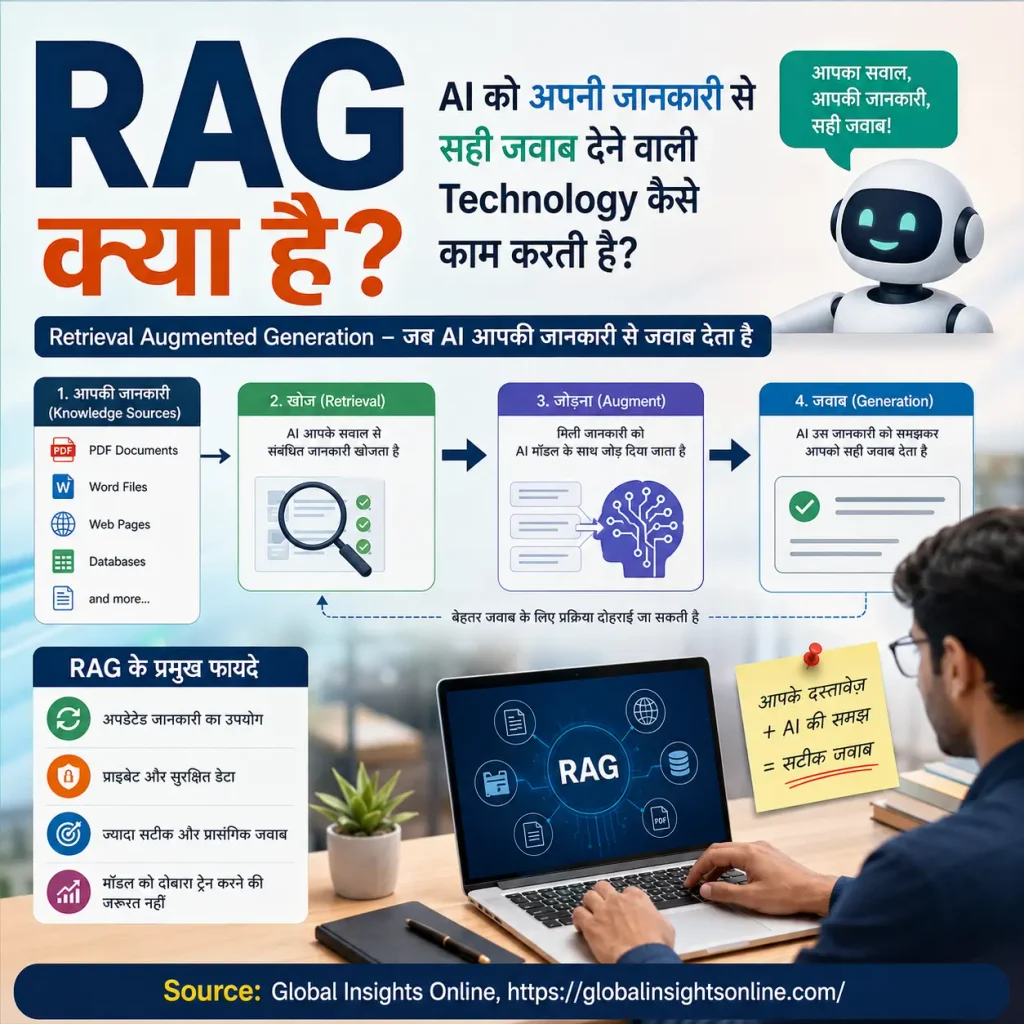
Artificial Intelligence की दुनिया में Large Language Models यानी LLMs ने information को समझने और natural language में जवाब देने का तरीका काफी बदल दिया है। आज AI से किसी topic पर explanation, summary, translation, analysis या content generation करवाना पहले से कहीं आसान है। लेकिन जैसे जैसे AI का इस्तेमाल business, education, customer support और research जैसे क्षेत्रों में बढ़ रहा है, एक महत्वपूर्ण सवाल भी सामने आया है। क्या AI केवल अपनी training में सीखी हुई जानकारी के आधार पर जवाब देगा या वह किसी कंपनी, संस्था या व्यक्ति की अपनी जानकारी को भी समझकर उसका इस्तेमाल कर सकता है?
यहीं से RAG क्या है का concept सामने आता है।
RAG का पूरा नाम Retrieval Augmented Generation है। सरल शब्दों में यह एक ऐसी AI architecture है जो Large Language Model को जरूरत पड़ने पर किसी external knowledge source से relevant information खोजकर देती है और फिर उसी information के आधार पर जवाब तैयार करवाती है। यह external information company documents, PDF files, websites, databases, product manuals, research papers या किसी private knowledge base से आ सकती है।
इस technology की खासियत यह है कि AI को हर नई जानकारी के लिए दोबारा train करना जरूरी नहीं होता। इसके बजाय relevant information को एक searchable knowledge system में रखा जाता है और जब user सवाल पूछता है तब system उस सवाल से संबंधित information निकालकर AI model के context में जोड़ देता है।
Google Cloud भी RAG को information retrieval और generative AI को combine करने वाले framework के रूप में समझाता है, जिसमें external data को retrieve करके LLM के response को अधिक relevant और grounded बनाया जाता है। RAG architecture, retrieval, grounding, vector search और evaluation समझाने के लिए Google Cloud की RAG Guide पढ़ें ।
RAG क्या है और इसका मतलब क्या होता है?
RAG को समझने के लिए इसके तीन शब्दों को समझना जरूरी है। Retrieval का अर्थ है किसी information source से relevant जानकारी खोजना। Augmented का अर्थ है उस information को AI के existing context में जोड़ना। Generation का मतलब है उस context की मदद से final answer तैयार करना।
इसलिए RAG को केवल एक search technology कहना सही नहीं होगा। यह search और generative AI के बीच एक bridge की तरह काम करता है। AG को समझने के लिए Artificial Intelligence के broader ecosystem को समझना भी जरूरी है। AI में Machine Learning, Generative AI, Large Language Models, AI Agents और Automation जैसी कई technologies एक साथ काम करती हैं। अगर आप इन technologies और उनके practical applications को एक जगह समझना चाहते हैं, तो हमारी AI Technology 2026 की Complete Guide पढ़ सकते हैं, जिसमें AI के प्रमुख trends, applications और future developments को विस्तार से समझाया गया है।
मान लीजिए किसी कंपनी के पास हजारों documents हैं। इनमें employee policies, product information, customer support manuals, financial reports और internal processes शामिल हैं। एक सामान्य LLM इन documents को केवल इसलिए नहीं जान सकता क्योंकि वे कंपनी के private systems में मौजूद हैं। यदि model की training में ये documents शामिल नहीं हैं तो वह इनके आधार पर reliable answer नहीं दे सकता।
RAG architecture इस problem को अलग तरीके से हल करती है। कंपनी के documents को पहले process करके searchable knowledge base बनाया जाता है। इसके बाद employee कोई सवाल पूछता है तो system relevant information खोजता है और उसे LLM के सामने context के रूप में रखता है। Model उस information को पढ़कर user को natural language में जवाब देता है।
यानी AI को नई information सिखाने के बजाय उसे जरूरत के समय सही information तक पहुंच दी जाती है।
Large Language Model को अपनी जानकारी की जरूरत क्यों पड़ती है?
LLMs ने language understanding और generation में बड़ा बदलाव किया है, लेकिन उनकी एक practical limitation है। वे जिस information पर trained हैं वह हर organization की latest या private information नहीं होती। उदाहरण के लिए किसी कंपनी ने अपनी work from home policy जनवरी 2026 में बदल दी। यदि उस policy की जानकारी AI model के training data में नहीं है तो model को वह change अपने आप पता नहीं होगा।
इसी तरह एक university का internal admission policy document, किसी bank का internal process manual या किसी software company का private API documentation public internet पर उपलब्ध नहीं भी हो सकता है। ऐसे cases में केवल general-purpose AI model पर्याप्त नहीं होता। यही कारण है कि enterprise AI applications में RAG का महत्व बढ़ रहा है। AWS के अनुसार RAG LLM को external data जैसे company के internal documents से context देने का तरीका है ताकि model किसी specific use case के लिए अधिक useful response दे सके। यह approach विशेष रूप से उन situations में उपयोगी है जहां information private, specialized या frequently changing हो। RAG और Generative AI को एक साथ समझना इसलिए महत्वपूर्ण है क्योंकि RAG का final output तैयार करने में अक्सर Generative AI और Large Language Models की भूमिका होती है। Generative AI केवल text generate करने तक सीमित नहीं है, बल्कि यह information को summarize करने, समझाने और अलग-अलग formats में नया content तैयार करने में भी सक्षम है। अगर आप Generative AI क्या है और यह कैसे काम करती है को विस्तार से समझना चाहते हैं, तो हमारी detailed guide उपयोगी हो सकती है।
RAG कैसे काम करता है?
पूरी प्रक्रिया को समझने के लिए मान लीजिए किसी कंपनी के पास 20,000 internal documents हैं और उसने एक AI assistant बनाया है। कर्मचारी पूछता है, “नई travel reimbursement policy में international business trip के लिए maximum allowance कितना है?” AI को केवल सवाल पढ़कर जवाब नहीं देना चाहिए। पहले उसे कंपनी के knowledge base में उस policy से संबंधित information खोजनी होगी। यहीं retrieval process शुरू होता है।
System user के सवाल को search-friendly representation में बदलता है। इसके बाद वह knowledge base में relevant documents या document sections खोजता है। Search system keyword matching, semantic search, vector search या इनका combination इस्तेमाल कर सकता है।
जो information सबसे ज्यादा relevant मिलती है उसे LLM के context में जोड़ा जाता है। फिर model उस context और user के सवाल को देखकर final response generate करता है।
Microsoft के वर्तमान RAG documentation के अनुसार इस workflow को broadly retrieve, augment और generate के तीन stages में समझा जा सकता है।
यही RAG architecture का basic foundation है।
सबसे पहले Documents को AI के लिए तैयार किया जाता है
किसी RAG system में documents सीधे upload करके काम पूरा नहीं हो जाता। सबसे पहले information को ऐसी structure में बदलना पड़ता है जिसे search system आसानी से समझ और retrieve कर सके। PDF, Word files, HTML pages, spreadsheets और दूसरे sources में information अलग-अलग formats में हो सकती है। Document processing का उद्देश्य इस information को clean और searchable बनाना होता है। इस process में unnecessary formatting हटाना, headings को identify करना, tables को process करना और document metadata को preserve करना शामिल हो सकता है।
अगर document processing खराब है तो बाद में retrieval भी कमजोर हो सकता है। उदाहरण के लिए एक 100-page employee handbook में salary policy, leave rules और travel policy तीन अलग sections में हो सकते हैं। यदि पूरा document एक ही large block के रूप में store कर दिया जाए तो specific question का सही हिस्सा खोजने में system को परेशानी हो सकती है। इसलिए अगला step महत्वपूर्ण होता है।
Chunking क्या है और यह इतना महत्वपूर्ण क्यों है?
बड़े documents को छोटे meaningful sections में divide करने की प्रक्रिया को chunking कहा जाता है। एक 100-page document को एक single piece की बजाय कई logical sections में divide किया जा सकता है। प्रत्येक section में एक specific topic या related information रखी जा सकती है। उदाहरण के लिए employee handbook में एक chunk leave policy से संबंधित हो सकता है, दूसरा travel reimbursement से और तीसरा work from home rules से। जब user travel reimbursement से जुड़ा सवाल पूछता है तो पूरा handbook LLM को देने की बजाय relevant chunks retrieve किए जा सकते हैं। यह approach efficiency बढ़ाती है और model के context में unnecessary information कम करती है।
लेकिन chunking केवल document को छोटे pieces में काटने का काम नहीं है। अच्छे RAG systems में chunk boundaries और surrounding context महत्वपूर्ण हो सकते हैं। अगर एक महत्वपूर्ण sentence दो अलग chunks में टूट गया तो retrieval quality प्रभावित हो सकती है। इसलिए document structure को समझकर chunking करना RAG performance के लिए महत्वपूर्ण है।
Embeddings क्या होते हैं?
RAG की technical foundation में embeddings एक महत्वपूर्ण concept है। Embedding किसी text या अन्य information को numerical representation में बदलने का तरीका है। इससे system information के semantic meaning के आधार पर similarity खोज सकता है। मान लीजिए knowledge base में लिखा है, “Employees are allowed to work remotely twice every week.” User पूछता है, “हर सप्ताह कितने दिन घर से काम कर सकते हैं?”
दोनों sentences में exact words समान नहीं हैं। लेकिन दोनों का meaning काफी similar है। Embedding-based semantic search इस similarity को पहचानने की कोशिश करता है। यही कारण है कि modern RAG systems केवल exact keyword matching पर निर्भर नहीं रहते। वे semantic relationships को भी समझने की कोशिश करते हैं। Microsoft के documentation के अनुसार embeddings content की numerical representations होती हैं जिनका उपयोग vector similarity search में किया जा सकता है।
Vector Database क्या है?
Embeddings बनने के बाद उन्हें ऐसे system में store करना पड़ता है जहां similarity search efficiently की जा सके। इसके लिए vector databases या vector indexes का इस्तेमाल किया जा सकता है। Vector database information के numerical representations को store करता है। जब user कोई सवाल पूछता है तो उस सवाल का भी embedding बनाया जा सकता है। System फिर question और stored information के बीच similarity देखकर relevant content खोज सकता है।
यही process बड़े knowledge bases में useful है क्योंकि system को हर document को manually पढ़ने की जरूरत नहीं होती। हालांकि यह समझना जरूरी है कि RAG का मतलब केवल vector database नहीं है। Vector search RAG architecture का एक component है। कुछ applications keyword search, semantic search, database queries, APIs और hybrid search जैसे अलग-अलग retrieval approaches का इस्तेमाल कर सकती हैं।
Google Cloud modern RAG systems में vector databases के साथ semantic search, keyword search और reranking जैसी techniques का उल्लेख करता है।
Hybrid Search क्या है?
कई real-world questions में केवल semantic similarity पर्याप्त नहीं होती।
मान लीजिए user किसी product का exact model number पूछता है। यहां keyword matching महत्वपूर्ण हो सकती है। दूसरी ओर user उसी product के बारे में सामान्य भाषा में सवाल पूछता है तो semantic search अधिक उपयोगी हो सकती है। Hybrid search इन दोनों approaches को combine करती है। इसमें keyword-based search और vector-based semantic search दोनों के results को combine किया जा सकता है। इसके बाद ranking system relevant results को ऊपर ला सकता है। Enterprise RAG में यह approach इसलिए महत्वपूर्ण है क्योंकि company documents में product codes, employee IDs, legal terms और technical terminology जैसे exact strings भी मौजूद हो सकते हैं।
Retriever की भूमिका क्या होती है?
Retriever RAG system का वह हिस्सा है जो user के सवाल के लिए relevant information खोजता है।
मान लीजिए किसी company knowledge base में 50,000 documents हैं। User पूछता है, “2026 की parental leave policy क्या है?” Retriever का काम पूरे 50,000 documents LLM को देना नहीं है। उसे केवल उन documents या chunks को खोजने की कोशिश करनी है जो इस question के सबसे करीब हैं। अगर system top 5 या top 10 relevant chunks select करता है तो LLM को एक focused context मिल सकता है।
यह retrieval quality बहुत महत्वपूर्ण है क्योंकि final answer की quality केवल LLM की language capability पर निर्भर नहीं करती। अगर सही information retrieve ही नहीं हुई तो powerful LLM भी सही answer नहीं दे पाएगा। Google Cloud भी स्पष्ट करता है कि retrieval mechanism RAG quality का critical हिस्सा है। अगर retrieved information irrelevant है तो generated answer भी off-topic या गलत हो सकता है।
Reranking क्या है?
कई बार search system कई potentially relevant results निकालता है लेकिन उनमें सभी equally useful नहीं होते। मान लीजिए दस chunks retrieve हुए। इनमें से तीन directly question का answer देते हैं, जबकि बाकी केवल related information रखते हैं। Reranking system इन results को फिर से evaluate करके सबसे relevant information को ऊपर ला सकता है। इसका उद्देश्य LLM को बेहतर context देना है।
Production RAG systems में retrieval और reranking की quality पर काफी ध्यान दिया जाता है क्योंकि final response की accuracy का एक बड़ा हिस्सा इस बात पर निर्भर करता है कि model को कौन सी information दिखाई गई।
Augmentation का मतलब क्या है?
Retrieval के बाद RAG process का दूसरा महत्वपूर्ण stage आता है जिसे augmentation कहा जाता है। इस stage में user का original question और retrieved information एक साथ LLM को दी जाती है। मान लीजिए user पूछता है, “क्या international customers के लिए warranty available है?” Knowledge base से relevant warranty policy retrieve होती है।
अब LLM को केवल user का question नहीं बल्कि policy का relevant context भी मिलता है। Model इस information को पढ़कर answer तैयार कर सकता है। इस approach में LLM की language generation capability और external knowledge source दोनों का इस्तेमाल होता है। यही RAG को traditional search से अलग बनाता है।
Generation stage में AI क्या करता है?
Generation RAG workflow का अंतिम हिस्सा है।
LLM को user का question, retrieved information और system instructions दिए जाते हैं। Model इन inputs को process करके final answer तैयार करता है। अगर system instructions सही तरीके से designed हैं तो model को retrieved sources पर आधारित answer देने के लिए कहा जा सकता है। कुछ enterprise applications source name, document title या citation भी response के साथ दिखा सकती हैं। Microsoft के अनुसार RAG applications retrieved content को grounding data के रूप में इस्तेमाल कर सकती हैं और response में source citations भी शामिल किए जा सकते हैं। इससे users के लिए यह समझना आसान होता है कि AI ने answer किस information के आधार पर बनाया।
RAG और सामान्य AI में क्या अंतर है?
सामान्य LLM user के question का answer मुख्य रूप से अपने learned parameters और conversation context के आधार पर generate करता है। RAG-enabled application पहले external knowledge source से relevant information retrieve कर सकती है। इस difference को एक सरल उदाहरण से समझें।
अगर आप किसी AI से पूछते हैं, “Artificial Intelligence क्या है?” तो सामान्य model अपनी learned knowledge से answer दे सकता है। लेकिन अगर आप पूछते हैं, “मेरी कंपनी की 2026 leave policy में कितनी annual leaves हैं?” तो general model के पास answer देने के लिए company-specific information नहीं होगी। RAG system company policy से relevant information retrieve करके answer तैयार कर सकता है। यानी RAG का मुख्य उद्देश्य AI को अधिक specific knowledge तक पहुंच देना है।
RAG और Fine Tuning में क्या अंतर है?
RAG और Fine Tuning को अक्सर एक-दूसरे का alternative समझ लिया जाता है, जबकि दोनों का उद्देश्य अलग हो सकता है। Fine Tuning का इस्तेमाल model के behavior या किसी specific task पर उसकी performance को adapt करने के लिए किया जा सकता है। RAG में external knowledge को runtime पर retrieve करके model के context में जोड़ा जाता है।
अगर company की product information हर महीने बदलती है तो हर update के लिए model को retrain या fine-tune करना practical नहीं हो सकता। ऐसे case में knowledge base update करना और retrieval system के माध्यम से नई information उपलब्ध कराना ज्यादा practical हो सकता है। AWS भी RAG को external knowledge base के साथ LLM responses को augment करने के approach के रूप में बताता है, जिससे model को retrain किए बिना specific domain information का उपयोग कराया जा सकता है।
हालांकि इसका मतलब यह नहीं है कि RAG और Fine Tuning में से हमेशा केवल एक ही चुनना चाहिए। कुछ advanced AI applications दोनों approaches को अलग-अलग जरूरतों के लिए साथ भी इस्तेमाल कर सकती हैं।
क्या RAG Hallucination को खत्म कर देता है?
यह RAG से जुड़ी सबसे common गलतफहमियों में से एक है। RAG hallucination को कम करने में मदद कर सकता है लेकिन यह hallucination को पूरी तरह खत्म करने की guarantee नहीं देता। अगर system गलत document retrieve करता है तो model उस गलत context के आधार पर answer दे सकता है। अगर knowledge base outdated है तो answer भी outdated हो सकता है।
अगर relevant information retrieval में नहीं आती तो model के पास पर्याप्त context नहीं होगा। इसलिए RAG को “AI की सारी गलतियां खत्म करने वाली technology” कहना सही नहीं है। इसे अधिक सही तरीके से AI response को trusted external information से ground करने वाली architecture कहा जा सकता है। Google Cloud भी बताता है कि retrieved information की relevance critical है और irrelevant retrieval होने पर response grounded होने के बावजूद गलत या off-topic हो सकता है।
RAG में Data Quality क्यों सबसे महत्वपूर्ण है?
किसी भी knowledge-based AI application में data quality की भूमिका बहुत बड़ी होती है। अगर database में outdated information है तो RAG उसे retrieve कर सकता है। अगर दो documents में contradictory policies हैं तो system को सही version identify करने में परेशानी हो सकती है। अगर documents poorly formatted हैं तो important information retrieval के दौरान खो सकती है। इसलिए RAG project शुरू करने से पहले data governance पर ध्यान देना जरूरी है। Companies को document ownership, update dates, versioning और access permissions जैसी चीजों को व्यवस्थित करना चाहिए।
एक अच्छा LLM खराब knowledge base को अपने आप reliable knowledge base में नहीं बदल सकता।
Metadata RAG को बेहतर कैसे बनाता है?
Metadata document के बारे में additional information देता है। उदाहरण के लिए किसी document के साथ department, country, language, date, document type और access level जैसी information store की जा सकती है।
मान लीजिए एक multinational company के पास India, UK और USA के अलग-अलग HR policies हैं। यदि employee India से सवाल पूछ रहा है तो retrieval system country metadata का इस्तेमाल करके India policy को प्राथमिकता दे सकता है। इसी तरह केवल current documents retrieve करने के लिए date metadata का इस्तेमाल किया जा सकता है। यह approach retrieval quality और information governance दोनों के लिए उपयोगी हो सकती है।
RAG के सबसे बड़े फायदे क्या हैं?
RAG का सबसे बड़ा advantage यह है कि AI को organization-specific information के साथ काम करने का तरीका मिलता है।
दूसरा फायदा updated information है। अगर underlying knowledge source regularly update होता है तो system नई information retrieve कर सकता है।
तीसरा फायदा domain-specific knowledge है। किसी specialized industry के documents के आधार पर AI assistant बनाया जा सकता है।
चौथा फायदा source-based answers हैं। सही architecture में response के साथ source information या citations भी दिखाई जा सकती हैं।
पांचवां फायदा flexibility है। अलग-अलग knowledge sources को retrieval architecture में जोड़ा जा सकता है।
AWS RAG के common use cases में search engines और question answering systems को शामिल करता है, जबकि Google Cloud fresh information, factual grounding और enterprise data access जैसे benefits पर जोर देता है। Enterprise data, RAG workflow और production considerations के लिए AWS की RAG Documentation पढ़ें ।
RAG की सीमाएं क्या हैं?
RAG powerful है लेकिन perfect नहीं है।
सबसे पहली limitation retrieval quality है। System को सही information खोजनी होगी।
दूसरी limitation data quality है। गलत या outdated data से सही answer की उम्मीद नहीं की जा सकती।
तीसरी limitation latency है। Search, reranking और LLM generation के कई stages response time बढ़ा सकते हैं।
चौथी limitation cost है। बड़ी मात्रा में documents और repeated retrieval operations infrastructure और model usage cost बढ़ा सकते हैं।
पांचवीं limitation security है। Private documents के साथ access control ठीक से implement करना जरूरी है।
छठी limitation evaluation है। Production system में केवल यह देखना पर्याप्त नहीं है कि AI answer दे रहा है। यह भी देखना होता है कि retrieved context relevant था या नहीं और final answer उस context के साथ properly grounded था या नहीं।
Microsoft की current documentation भी RAG systems में security, privacy, cost, latency और limitations को महत्वपूर्ण implementation considerations के रूप में शामिल करती है।
RAG के प्रकार कौन से हैं?
RAG एक single fixed architecture नहीं है। अलग-अलग applications में इसके implementation अलग हो सकते हैं। Basic RAG में user query के आधार पर relevant chunks retrieve करके LLM को दिए जाते हैं। Hybrid RAG में keyword और semantic retrieval को combine किया जा सकता है। Multimodal RAG में text के साथ images, tables, audio या video जैसी information को भी retrieval process में शामिल किया जा सकता है। Advanced agentic RAG में AI system complex question को कई retrieval tasks में divide कर सकता है और अलग-अलग sources से information collect कर सकता है। Microsoft के latest RAG documentation में agentic retrieval को classic retrieval pattern से आगे बढ़ने वाली approach के रूप में discuss किया गया है।
Agentic RAG क्या है?
Classic RAG में user question से relevant information खोजी जाती है और फिर answer generate किया जाता है। लेकिन complex business questions में एक search पर्याप्त नहीं हो सकती। मान लीजिए किसी executive ने पूछा, “India और Europe में पिछले तीन साल की sales growth compare करें और बताएं कि किस region की profitability बेहतर रही।” इस question के लिए केवल एक document पर्याप्त नहीं होगा। Sales reports, regional data और financial documents अलग-अलग sources में हो सकते हैं।
Agentic RAG system इस question को multiple tasks में divide कर सकता है। वह अलग-अलग sources से information retrieve कर सकता है, results को combine कर सकता है और फिर final analysis तैयार कर सकता है। यही वजह है कि RAG अब simple document chatbot से आगे बढ़कर AI agents और enterprise knowledge systems का हिस्सा बन रहा है।
Agentic RAG को समझने के लिए Agentic AI की basic concept को समझना भी जरूरी है। जहां traditional AI किसी specific instruction का जवाब दे सकती है, वहीं Agentic AI complex goals को पूरा करने के लिए planning, decision making और multiple actions का इस्तेमाल कर सकती है। अगर आप इस emerging technology के बारे में विस्तार से जानना चाहते हैं, तो Agentic AI क्या है और यह कैसे काम करती है हमारी संबंधित guide पढ़ सकते हैं।
India में RAG का उपयोग क्यों महत्वपूर्ण हो सकता है?
भारत में businesses तेजी से AI adoption की तरफ बढ़ रहे हैं। भारतीय organizations के पास information कई languages और formats में हो सकती है। किसी organization के official documents English में हो सकते हैं लेकिन employees Hindi में सवाल पूछ सकते हैं। Customer support में भी users अलग-अलग Indian languages का इस्तेमाल कर सकते हैं।
Multilingual RAG systems ऐसे scenarios में useful हो सकते हैं क्योंकि user query और knowledge source अलग languages में होने के बावजूद relevant information retrieve करने की कोशिश की जा सकती है। Banking, education, e-commerce, healthcare research, government services और enterprise support जैसे क्षेत्रों में organization-specific AI assistants के लिए RAG architecture उपयोगी हो सकती है। हालांकि sensitive domains में accuracy और data security को technology adoption से पहले प्राथमिकता देना जरूरी होगा।
भारत में RAG जैसी technologies का महत्व इसलिए भी बढ़ रहा है क्योंकि कई startups और technology companies Artificial Intelligence को अलग-अलग industries में लागू कर रही हैं। Healthcare, Banking, Customer Support, Enterprise Software और Indian Language AI जैसे क्षेत्रों में भारतीय कंपनियां नए AI solutions विकसित कर रही हैं। भारत के emerging AI ecosystem को समझने के लिए हमारी AI Startups India 2026 की विस्तृत guide पढ़ी जा सकती है, जिसमें प्रमुख Indian AI companies, उनके focus areas और future opportunities को समझाया गया है।
Global Businesses के लिए RAG क्यों महत्वपूर्ण है?
Global organizations में information अलग-अलग countries, departments और systems में distributed होती है। एक multinational organization में HR policy country के हिसाब से अलग हो सकती है। Product rules market के हिसाब से बदल सकते हैं। Legal requirements भी region-specific हो सकती हैं। ऐसे environment में एक general AI model को हर internal policy याद होना जरूरी नहीं है। Instead, application relevant policy source से information retrieve कर सकती है। यही enterprise AI में RAG का बड़ा advantage है।
AWS भी custom documents, internal websites और organizational knowledge जैसे sources के साथ RAG को enterprise applications के लिए practical approach के रूप में describe करता है।
Customer Support में RAG कैसे काम कर सकता है?
Customer support RAG का एक practical example है।
मान लीजिए किसी electronics company के पास हजारों product manuals, warranty policies और troubleshooting documents हैं।Customer पूछता है, “मेरे product की warranty कितने साल की है और replacement के लिए कौन सा document चाहिए?”RAG system customer के सवाल के आधार पर relevant warranty policy और product document retrieve कर सकता है। LLM इन documents की information को समझकर conversational answer बना सकता है।इससे customer को कई documents manually search करने की जरूरत कम हो सकती है। साथ ही company अपने official knowledge sources को update करके AI assistant की information को भी update रख सकती है।
Education में RAG का उपयोग
Education sector में भी RAG का उपयोग interesting हो सकता है। एक university अपने syllabus, academic rules, course material और student handbook को knowledge base में रख सकती है।Student पूछ सकता है, “Assignment submit करने के बाद कितने दिन में resubmission की अनुमति है?”AI assistant relevant academic policy retrieve करके answer दे सकता है। यह approach students और faculty दोनों के लिए useful हो सकती है। हालांकि academic applications में source citation और official document verification महत्वपूर्ण रहेंगे।
Software Development में RAG
Software development में documentation बहुत तेजी से बदल सकती है। Developers को APIs, internal coding standards, architecture documents और troubleshooting guides से लगातार information चाहिए होती है। एक RAG-powered developer assistant internal documentation से relevant information खोजकर developer को answer दे सकता है। उदाहरण के लिए developer पूछ सकता है, “हमारे payment service में authentication token refresh कैसे implement किया गया है?” System internal engineering documentation से relevant section retrieve करके answer दे सकता है। इससे AI assistant केवल general programming knowledge तक सीमित नहीं रहता बल्कि organization-specific knowledge तक भी पहुंच सकता है।
Research और Knowledge Management में RAG
Research organizations के पास हजारों papers, reports और datasets हो सकते हैं। ऐसे environment में information खोजने में काफी समय लग सकता है। RAG-based system researchers को natural language questions के माध्यम से relevant documents खोजने और उनका summarized answer प्राप्त करने में मदद कर सकता है। 2020 में Patrick Lewis और co-authors ने Retrieval-Augmented Generation पर प्रकाशित research में pre-trained language models को external non-parametric memory के साथ combine करने का approach प्रस्तुत किया था। Original research ने knowledge-intensive NLP tasks में retrieval और generation को जोड़ने की दिशा में महत्वपूर्ण आधार दिया।
आज के enterprise RAG systems उस शुरुआती research concept से काफी आगे विकसित हो चुके हैं।
क्या RAG के लिए हमेशा Vector Database चाहिए?
नहीं।
यह एक common misconception है। RAG का मूल idea relevant external information retrieve करके उसे LLM के context में देना है। Retrieval के लिए vector database एक लोकप्रिय तरीका है लेकिन यह अकेला विकल्प नहीं है। Application की जरूरत के अनुसार keyword index, semantic search engine, SQL database, APIs या hybrid retrieval इस्तेमाल किया जा सकता है। इसलिए किसी RAG project में technology selection use case पर निर्भर होना चाहिए। अगर information structured database में है तो SQL query ज्यादा effective हो सकती है। अगर information unstructured documents में है तो semantic या vector search उपयोगी हो सकती है।
RAG की Accuracy कैसे बढ़ाई जा सकती है?
High-quality RAG system बनाने के लिए केवल अच्छा LLM चुनना पर्याप्त नहीं है। सबसे पहले trusted और updated data source चुनना चाहिए। इसके बाद documents को properly process करना चाहिए। Chunking strategy ऐसी होनी चाहिए कि meaningful information साथ रहे। Embedding model और retrieval method use case के अनुसार चुनना चाहिए। जहां जरूरी हो वहां hybrid search और reranking का उपयोग किया जा सकता है। System prompt में model को यह स्पष्ट किया जा सकता है कि retrieved context को प्राथमिक source माना जाए और information उपलब्ध न होने पर अनुमान लगाने की बजाय limitation बताई जाए। इसके बाद लगातार evaluation करना जरूरी है। Google Cloud RAG evaluation में groundedness, relevance, coherence और question answering quality जैसे factors को measure करने की बात करता है। यानी अच्छी RAG performance एक single technology से नहीं बल्कि पूरे pipeline की quality से आती है।
RAG में Security क्यों महत्वपूर्ण है?
जब RAG private company data के साथ काम करता है तो security केवल optional feature नहीं रह जाती। मान लीजिए company के पास confidential financial reports हैं। हर employee को इन reports को देखने की permission नहीं हो सकती। यदि retrieval system authorization को ignore करता है तो AI गलत user को sensitive information दिखा सकता है। इसलिए enterprise RAG systems में user identity, document permissions, access control और data governance महत्वपूर्ण हैं। AWS documentation में भी RAG systems के लिए end-user permissions के अनुसार document retrieval को restrict करने की capabilities का उल्लेख मिलता है। यह विशेष रूप से banking, healthcare, legal और corporate environments में महत्वपूर्ण है।
क्या RAG Real Time Information दे सकता है?
RAG current information तक पहुंच दे सकता है, लेकिन यह इस बात पर निर्भर करता है कि उसका knowledge source कितना updated है। अगर RAG system किसी regularly updated database से information retrieve करता है तो वह latest available data पर आधारित answer दे सकता है।लेकिन अगर knowledge base छह महीने पुराना है तो RAG उसे automatically current नहीं बना देगा। इसलिए “RAG हमेशा real-time information देता है” कहना भी सही नहीं है। Real-time capability data source और retrieval pipeline की update frequency पर निर्भर करती है।
RAG और AI Search का Future
Search का traditional model धीरे-धीरे बदल रहा है। पहले user keyword डालता था और search engine links की list देता था। अब users increasingly natural language में questions पूछ रहे हैं और सीधे synthesized answers चाहते हैं। RAG इस transition में महत्वपूर्ण भूमिका निभा सकता है क्योंकि यह search और generative AI को एक workflow में जोड़ता है। Future AI search systems में user केवल यह नहीं पूछेगा कि “यह document कहां है?” वह पूछ सकता है, “इन सभी documents को पढ़कर बताओ कि इस project के सबसे बड़े risks क्या हैं।”
ऐसे questions के लिए retrieval के साथ reasoning और generation भी जरूरी होगी। यहीं RAG का महत्व बढ़ता है।
RAG का भविष्य Agentic AI के साथ
AI agents के विकास के साथ RAG architecture भी अधिक sophisticated हो रही है।
Future systems एक सवाल के लिए एक search करने के बजाय कई sources को independently query कर सकते हैं। वे retrieved information की quality check कर सकते हैं, missing information के लिए दूसरा search कर सकते हैं और फिर final response तैयार कर सकते हैं। इस तरह RAG केवल knowledge retrieval system नहीं रहेगा बल्कि AI agent की memory और information access layer का हिस्सा बन सकता है।
Microsoft की current documentation में agentic retrieval को complex conversational queries के लिए modern retrieval approach के रूप में describe किया गया है।
क्या हर AI Application में RAG जरूरी है?
नहीं।
अगर AI application creative writing, brainstorming या general conversation के लिए है तो RAG जरूरी नहीं हो सकता। लेकिन अगर application को private, specialized, current या organization-specific information के आधार पर जवाब देना है तो RAG काफी useful architecture हो सकती है।उदाहरण के लिए किसी company का internal HR assistant RAG से लाभ उठा सकता है, जबकि केवल creative story लिखने वाले AI application को इसकी जरूरत नहीं हो सकती।इसलिए RAG का इस्तेमाल problem के आधार पर तय होना चाहिए।
RAG को एक आसान उदाहरण से समझिए
मान लीजिए आपके पास 10,000 किताबों की एक बड़ी library है। आपसे कोई ऐसा सवाल पूछता है जिसका answer इन किताबों में मौजूद है लेकिन आपको याद नहीं है। आप पहले library में relevant book खोजते हैं। फिर उस book का relevant chapter ढूंढते हैं। उसके बाद information पढ़कर अपने शब्दों में सामने वाले को जवाब देते हैं।RAG लगभग इसी concept को AI system में लागू करता है।
Knowledge base आपकी library है।
Retriever आपका search assistant है।
Retrieved chunks relevant pages हैं।
LLM वह intelligent assistant है जो इन pages को पढ़कर natural language answer तैयार करता है।
इस example से RAG का basic concept काफी आसानी से समझा जा सकता है।
RAG को लेकर सबसे बड़ी गलतफहमी
RAG को कभी-कभी केवल “AI को अपनी documents दे देना” समझ लिया जाता है। असल में production RAG इससे कहीं ज्यादा complex हो सकता है। Document ingestion, parsing, chunking, embeddings, indexing, retrieval, filtering, reranking, prompt construction, generation, citations, security और evaluation सभी components मिलकर एक reliable system बनाते हैं। अगर इनमें से किसी महत्वपूर्ण layer में समस्या है तो final answer की quality प्रभावित हो सकती है। इसलिए RAG implementation को केवल LLM project की तरह नहीं बल्कि complete information retrieval और AI application architecture की तरह देखना चाहिए।
RAG का Business Impact क्या हो सकता है?
Business perspective से RAG का सबसे बड़ा impact knowledge access में हो सकता है। Large organizations में information मौजूद होती है लेकिन सही समय पर सही employee तक पहुंचना हमेशा आसान नहीं होता। एक नया employee कई internal documents पढ़ने में घंटों या दिनों का समय लगा सकता है। RAG-powered assistant employee को natural language में relevant information खोजने में मदद कर सकता है। Customer support teams भी product documentation से answers जल्दी खोज सकती हैं। Sales teams product specifications और internal pricing information तक तेजी से पहुंच सकती हैं। Legal teams large document collections में relevant sections खोज सकती हैं। यानी RAG का business value केवल AI chatbot बनाने में नहीं बल्कि organizational knowledge को अधिक accessible बनाने में हो सकता है।
Enterprise environment में RAG का उपयोग अक्सर AI Automation के साथ मिलकर किया जा सकता है। उदाहरण के लिए, एक company का AI assistant केवल policy से answer देने तक सीमित नहीं रह सकता, बल्कि retrieved information के आधार पर किसी workflow को आगे बढ़ाने में भी मदद कर सकता है। अगर आप जानना चाहते हैं कि Artificial Intelligence किस तरह repetitive और business processes को automate कर रही है, तो हमारी AI Automation की पूरी जानकारी वाली guide पढ़ सकते हैं।
भारत और दुनिया के लिए RAG का अगला चरण
भारत में AI adoption तेजी से अलग-अलग industries तक पहुंच रहा है और global companies भी अपने proprietary data के साथ generative AI को integrate करने पर ध्यान दे रही हैं। इस environment में RAG एक practical architecture के रूप में महत्वपूर्ण रह सकती है क्योंकि companies के पास valuable internal information पहले से मौजूद है।
अगला चरण केवल documents को search करने वाला AI नहीं होगा। AI systems databases, business applications, APIs, enterprise search और other information sources को एक साथ use कर सकते हैं। Multilingual और multimodal capabilities के साथ RAG applications और अधिक useful हो सकती हैं। लेकिन जैसे-जैसे systems powerful होंगे, data governance, security, source transparency और evaluation की importance भी बढ़ेगी।
निष्कर्ष
RAG क्या है का सबसे सरल जवाब यह है कि यह AI को external knowledge से relevant information retrieve करके उसी के आधार पर अधिक contextual और grounded answer देने में मदद करने वाली architecture है। Large Language Models ने AI को language समझने और generate करने की क्षमता दी है, लेकिन real-world applications में केवल general knowledge पर्याप्त नहीं होता। Companies को अपनी policies से answers चाहिए, universities को अपने academic documents से answers चाहिए और customers को latest product information चाहिए।
RAG इस gap को भरने की कोशिश करता है। इसमें documents को process किया जाता है, information को searchable बनाया जाता है, user query के आधार पर relevant content retrieve किया जाता है और फिर LLM उस information को natural language response में बदलता है। लेकिन RAG कोई magic solution नहीं है। अगर data खराब है, retrieval गलत है या security कमजोर है तो final answer भी problematic हो सकता है। इसलिए successful implementation के लिए data quality, retrieval accuracy, access control और continuous evaluation जरूरी हैं।
2020 की original Retrieval Augmented Generation research से लेकर आज के enterprise और agentic AI systems तक यह concept काफी विकसित हो चुका है। आने वाले समय में RAG का महत्व केवल chatbots तक सीमित नहीं रह सकता। यह enterprise knowledge management, AI search, customer service, software development, research और AI agents की underlying information layer का हिस्सा बन सकता है। यही कारण है कि RAG को Generative AI की एक और technical term के बजाय AI को वास्तविक और organization-specific information से जोड़ने वाली महत्वपूर्ण technology के रूप में समझना चाहिए।
अगर आप AI और Technology की नई जानकारी हिंदी में पढ़ना चाहते हैं, तो Global Insights Online के Technology section को भी इस article के साथ internal link किया जा सकता है। इसी तरह business readers के लिए [Business और Finance की पूरी जानकारी] वाला section उपयोगी internal destination हो सकता है।
Frequently Asked Questions
RAG क्या है?
RAG का पूरा नाम Retrieval Augmented Generation है। यह एक AI architecture है जिसमें user के सवाल के लिए external knowledge source से relevant information retrieve की जाती है और फिर उस information को LLM के context में देकर answer generate किया जाता है।
RAG का पूरा नाम क्या है?
RAG का पूरा नाम Retrieval Augmented Generation है। Retrieval का अर्थ information खोजना, Augmented का अर्थ retrieved information को model के context में जोड़ना और Generation का अर्थ final response तैयार करना है।
RAG AI में क्यों इस्तेमाल किया जाता है?
RAG का इस्तेमाल AI को private, specialized या frequently changing information के आधार पर जवाब देने में मदद करने के लिए किया जाता है। इससे हर नई information के लिए model को retrain करना जरूरी नहीं होता।
RAG और LLM में क्या अंतर है?
LLM language समझने और generate करने वाला model है। RAG एक architecture है जो LLM को external knowledge source से relevant information उपलब्ध कराती है। इसलिए दोनों एक-दूसरे के alternatives नहीं बल्कि अलग layers हो सकते हैं।
RAG और Fine Tuning में क्या अंतर है?
Fine Tuning model के behavior या task performance को additional training के माध्यम से adapt करती है। RAG external information को query के समय retrieve करके model के context में जोड़ती है।
क्या RAG hallucination खत्म कर सकता है?
नहीं। RAG hallucination को कम करने में मदद कर सकता है लेकिन उसे पूरी तरह खत्म नहीं करता। Retrieval की quality और knowledge base की accuracy final response के लिए महत्वपूर्ण रहती है।
क्या RAG के लिए Vector Database जरूरी है?
नहीं। Vector database एक common component है लेकिन RAG keyword search, semantic search, databases, APIs या hybrid retrieval का भी उपयोग कर सकता है।
RAG में Embeddings क्या होते हैं?
Embeddings information को numerical representation में बदलते हैं। इन representations का इस्तेमाल semantic similarity खोजने के लिए किया जा सकता है।
RAG में Chunking क्या है?
Chunking बड़े documents को छोटे meaningful sections में divide करने की प्रक्रिया है। Retrieval system इन chunks में से user के सवाल से संबंधित information खोज सकता है।
क्या RAG Hindi में काम कर सकता है?
हाँ। Multilingual RAG systems Hindi सहित कई languages में questions और knowledge sources के साथ काम कर सकते हैं। Performance selected models, embeddings, data quality और retrieval architecture पर निर्भर करती है।
RAG का उपयोग किन industries में होता है?
RAG का उपयोग customer support, education, software development, enterprise knowledge management, research, e-commerce, banking और कई अन्य क्षेत्रों में किया जा सकता है।
क्या RAG private company data के साथ इस्तेमाल हो सकता है?
हाँ। RAG private company documents के साथ इस्तेमाल किया जा सकता है। लेकिन confidential information के लिए authentication, authorization, access control और data governance जरूरी हैं।
Agentic RAG क्या है?
Agentic RAG एक advanced retrieval approach है जिसमें AI complex questions को multiple tasks में divide करके अलग-अलग sources से information retrieve कर सकता है और फिर final answer तैयार कर सकता है।
क्या RAG real-time information देता है?
RAG real-time या near-current information दे सकता है अगर उसका underlying data source regularly updated हो। RAG अपने आप outdated knowledge base को real-time नहीं बनाता।
क्या RAG Traditional Search से बेहतर है?
दोनों के अलग-अलग उपयोग हैं। Traditional search documents और links खोजने में useful है। RAG retrieved information को LLM के साथ combine करके conversational answer तैयार कर सकता है।
RAG का भविष्य क्या है?
RAG का future AI search, enterprise knowledge systems, multimodal applications और AI agents के साथ जुड़ता दिखाई दे रहा है। Advanced systems multiple data sources से information retrieve करके complex questions का answer तैयार कर सकते हैं।